
An ecommerce AI team positioning
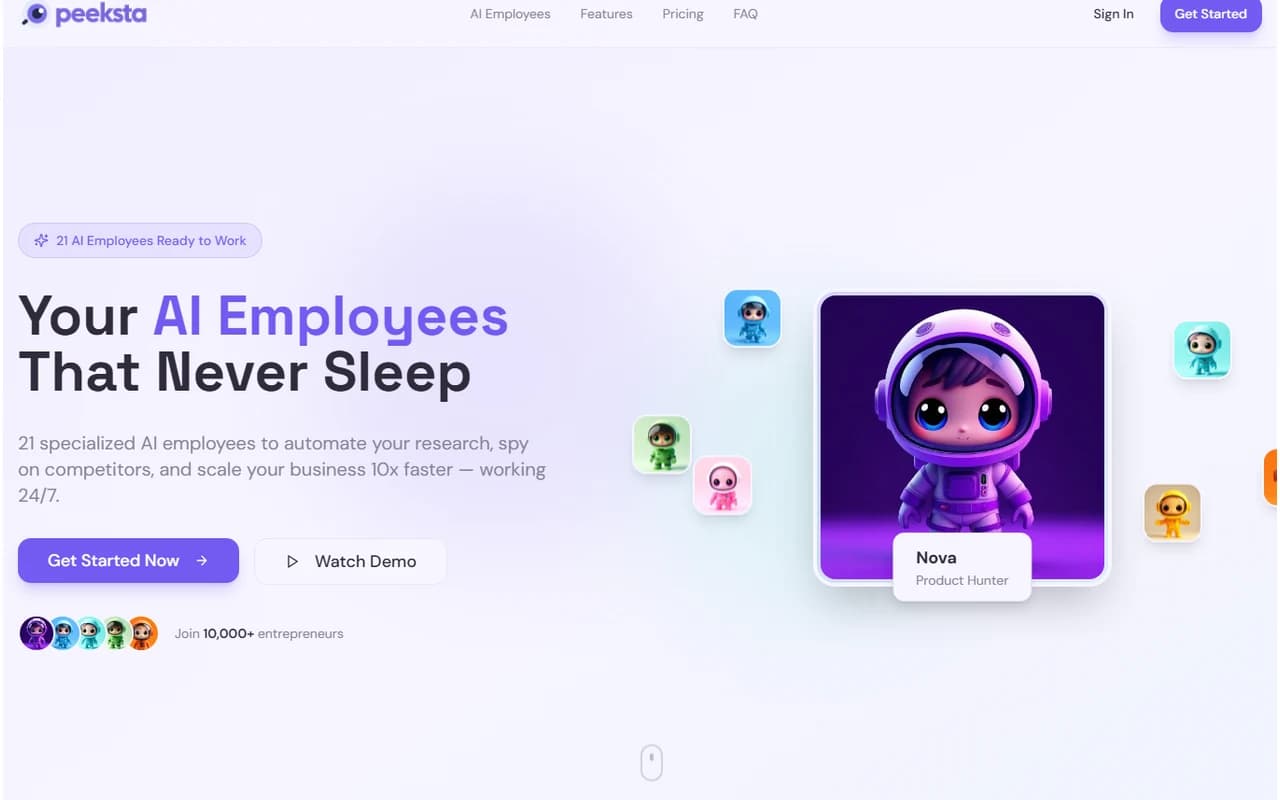
The homepage presents Peeksta as a team of AI helpers for research, competitor monitoring and creative work. For Spybox, this is a starting point, not market proof.
Peeksta homepagePeeksta now presents itself as a team of 21 specialized AI helpers. For Spybox users, the most useful roles are the ecommerce research helpers: Product Hunter, Ad Spyder, Trend Scout, Store Analyzer, Supplier Scout and Creative Generator.

Product research assistant
Peeksta
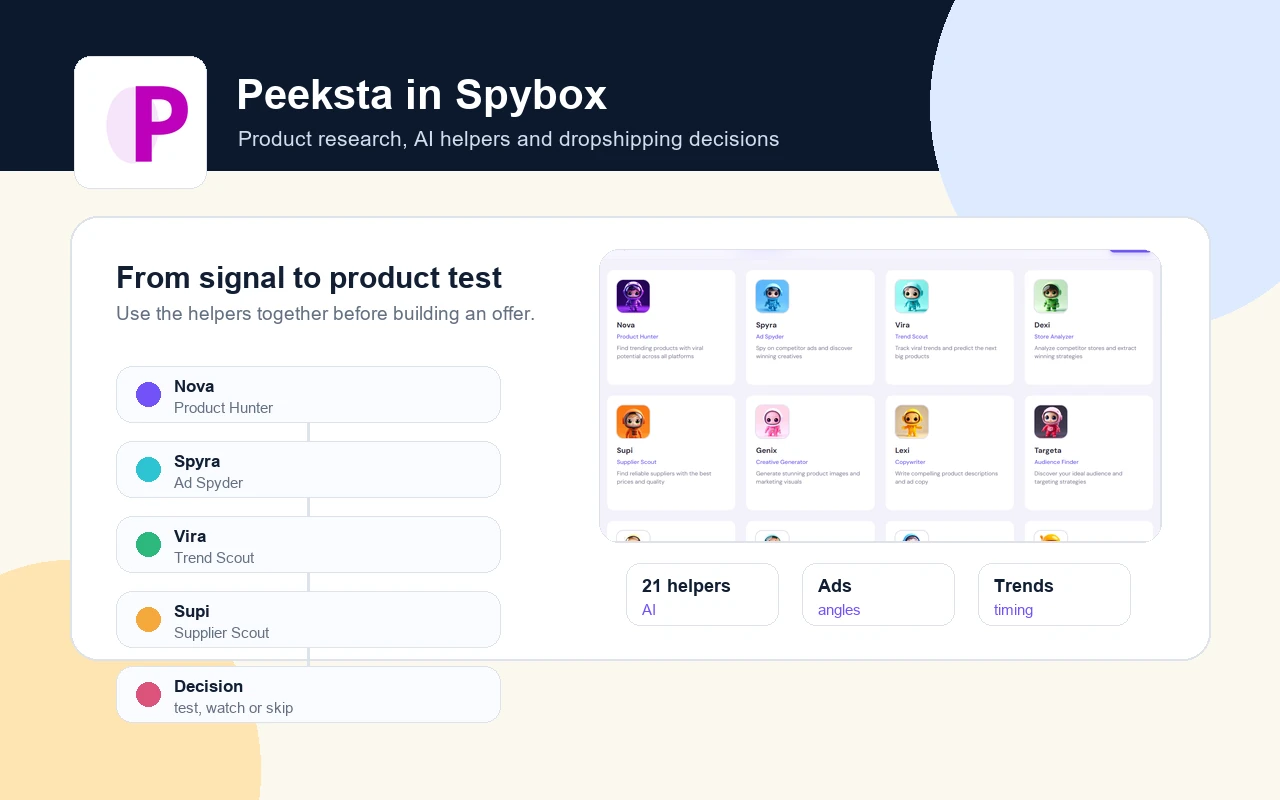
The useful Peeksta workflow is not just asking for ideas. It is turning an AI suggestion into a verified decision with ads, stores, margin, suppliers and a creative angle.
21
AI helpers
The official site presents 21 specialized helpers for research, Amazon, Etsy, marketing, creative work and digital products.
$19
official listed price
Peeksta publicly lists a Pro plan at $19/month, or $15/month billed annually. Recheck before any direct purchase.
100 000
SBC credits/month
Inside the Spybox offer at 29,99 €/mois, with the premium tool stack available from the dashboard.
Peeksta is useful when product research starts to get scattered. One helper can suggest a product lead, another can look at ads, another can help frame the angle or supplier question. The value does not come from one isolated answer; it comes from connecting those answers to market signals.
Inside Spybox, Peeksta should behave like a qualification workspace. Start with a category or customer problem, use Nova to surface possible products, use Spyra to check whether ads exist, use Vira to read timing, then cross-check the lead with Minea, Dropispy, ShopHunter or Sell The Trend.
The right output is not vague excitement. At the end of the session, every lead should be placed into one of three buckets: limited test, watch for a few days, or skip. That discipline keeps an AI suggestion from becoming a rushed launch.
An AI helper can structure research, but it does not prove margin, supplier reliability, ad saturation or stable demand. Peeksta answers should be cross-checked before producing a page, an ad or a batch of assets.
Peeksta is less a simple product list and more a set of helpers for asking better questions before an ecommerce test.
Nova Product Hunter helps open a search when the team does not yet have a clear category or angle.
Spyra Ad Spyder helps check whether competitor angles already exist and whether the product is carried by real creatives.
Vira Trend Scout helps separate an interesting trend from a late or already crowded signal.
Supi, Genix, Lexi and Targeta can support supplier, visual, copy and audience work, but only after validation.
Public previews
The visuals below come from public pages. They help explain Peeksta's current positioning and the surfaces that matter in a Spybox routine.
The homepage presents Peeksta as a team of AI helpers for research, competitor monitoring and creative work. For Spybox, this is a starting point, not market proof.
Peeksta homepage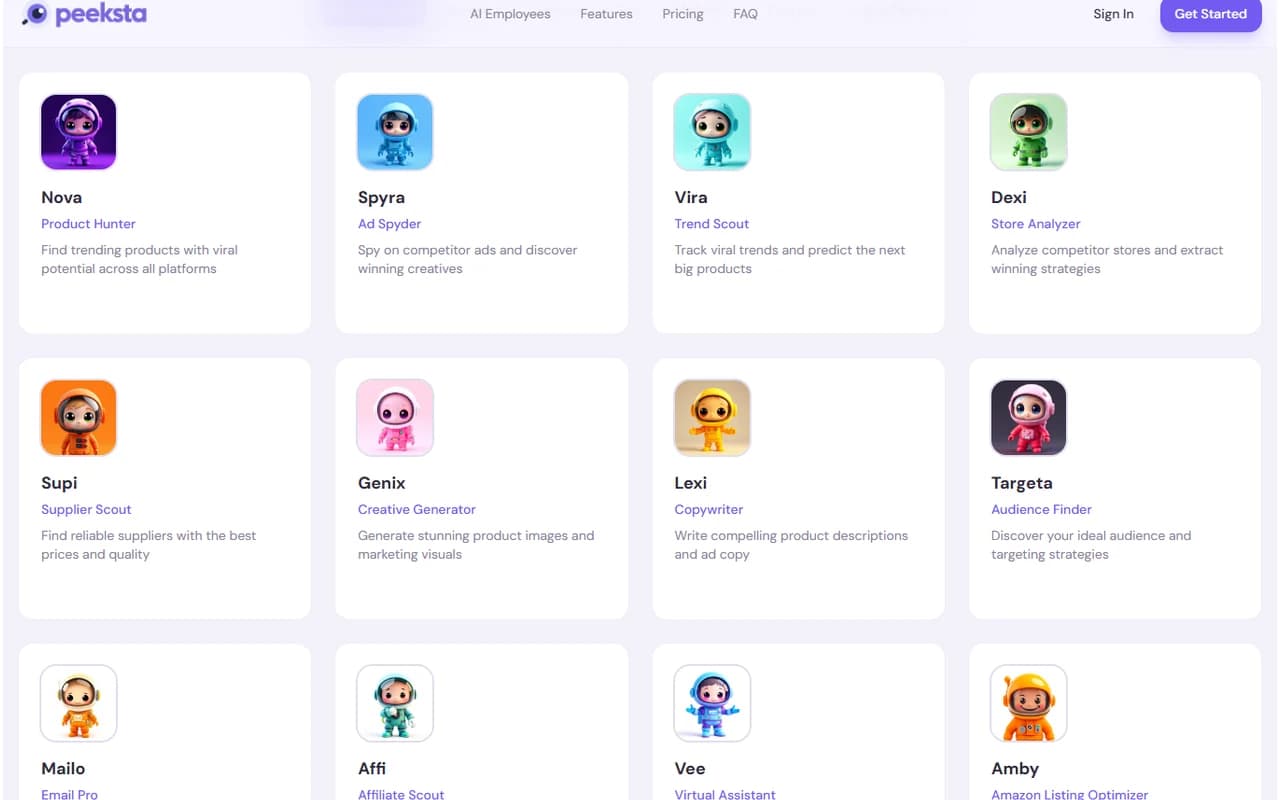
Nova, Spyra, Vira, Dexi and Supi cover the core needs of a dropshipper: product, ads, trend, store and supplier.
Peeksta AI helpers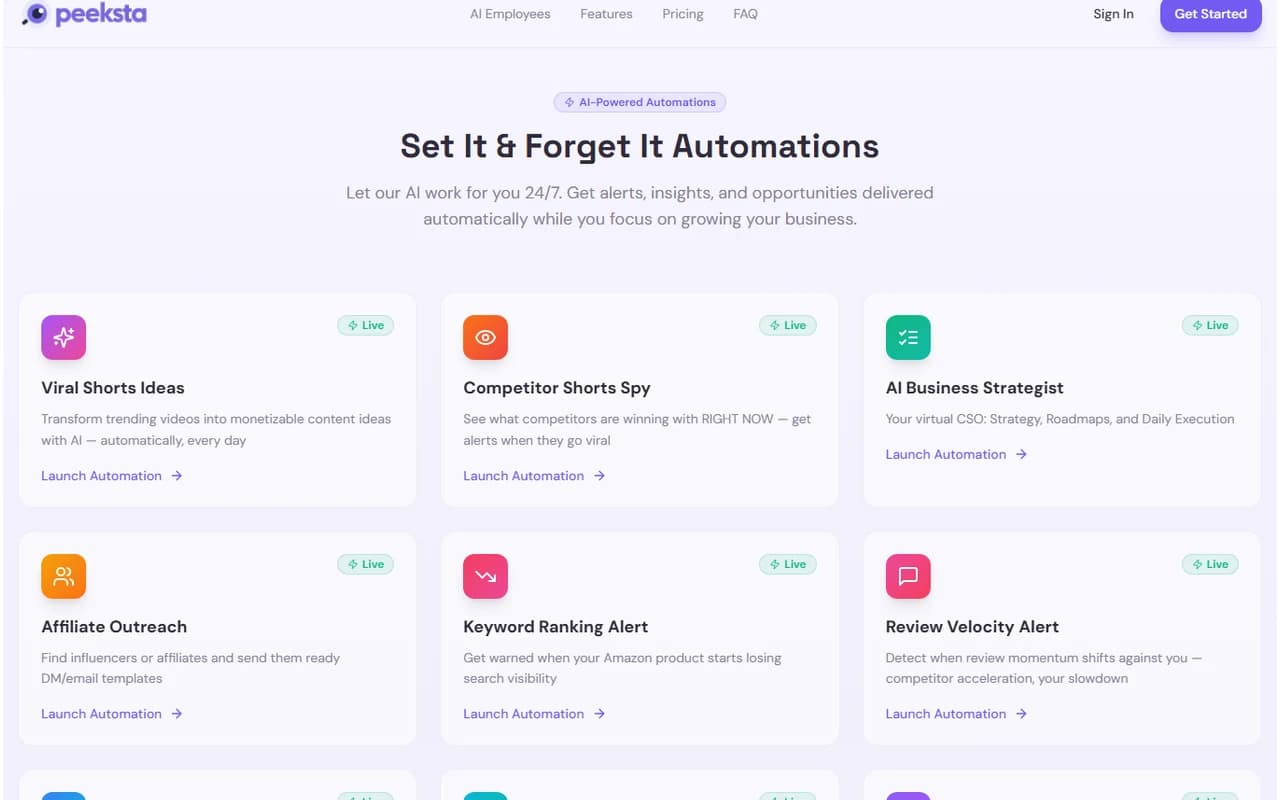
The public blocks mention Competitor Shorts Spy, Scaling Detector and Winning Product Radar. Inside Spybox, those alerts should be confirmed with other tools.
Peeksta automations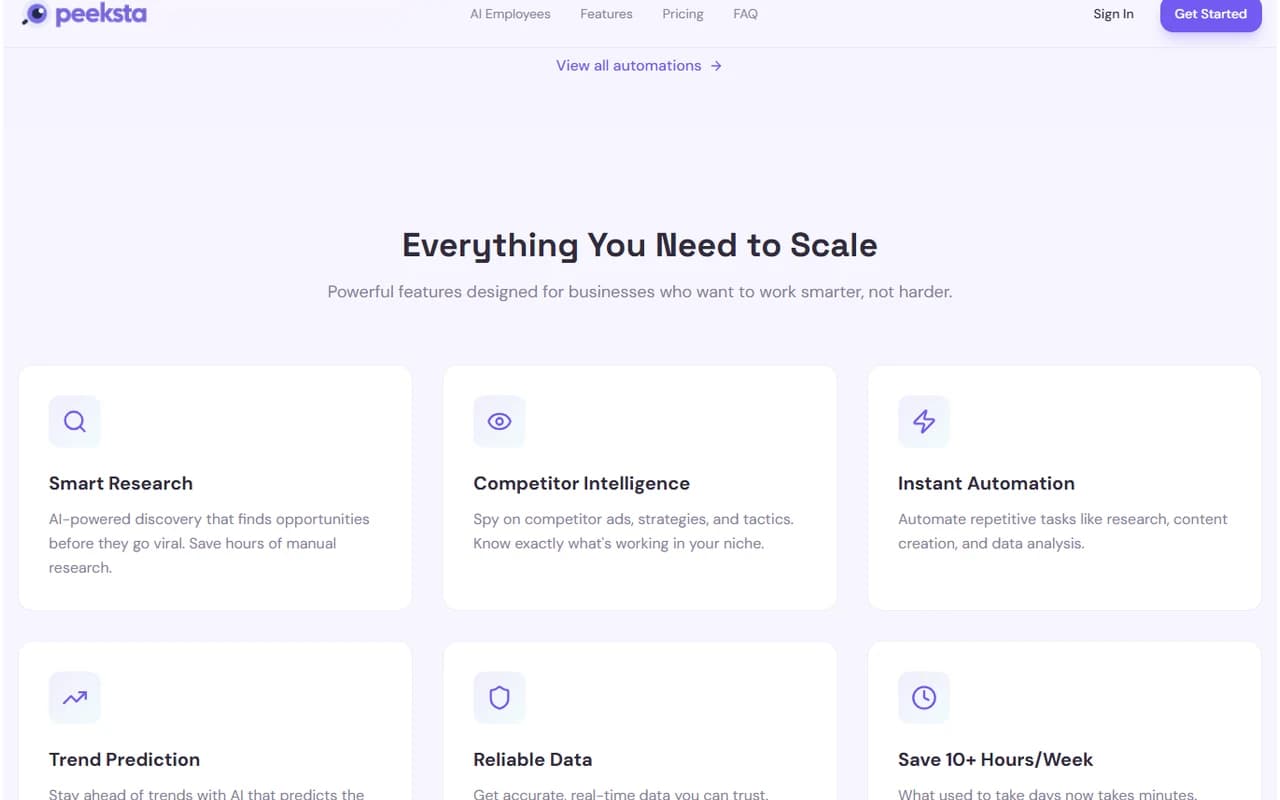
The features section highlights Smart Research, Competitor Intelligence, Trend Prediction and Reliable Data. They make good validation checklist headings.
Peeksta features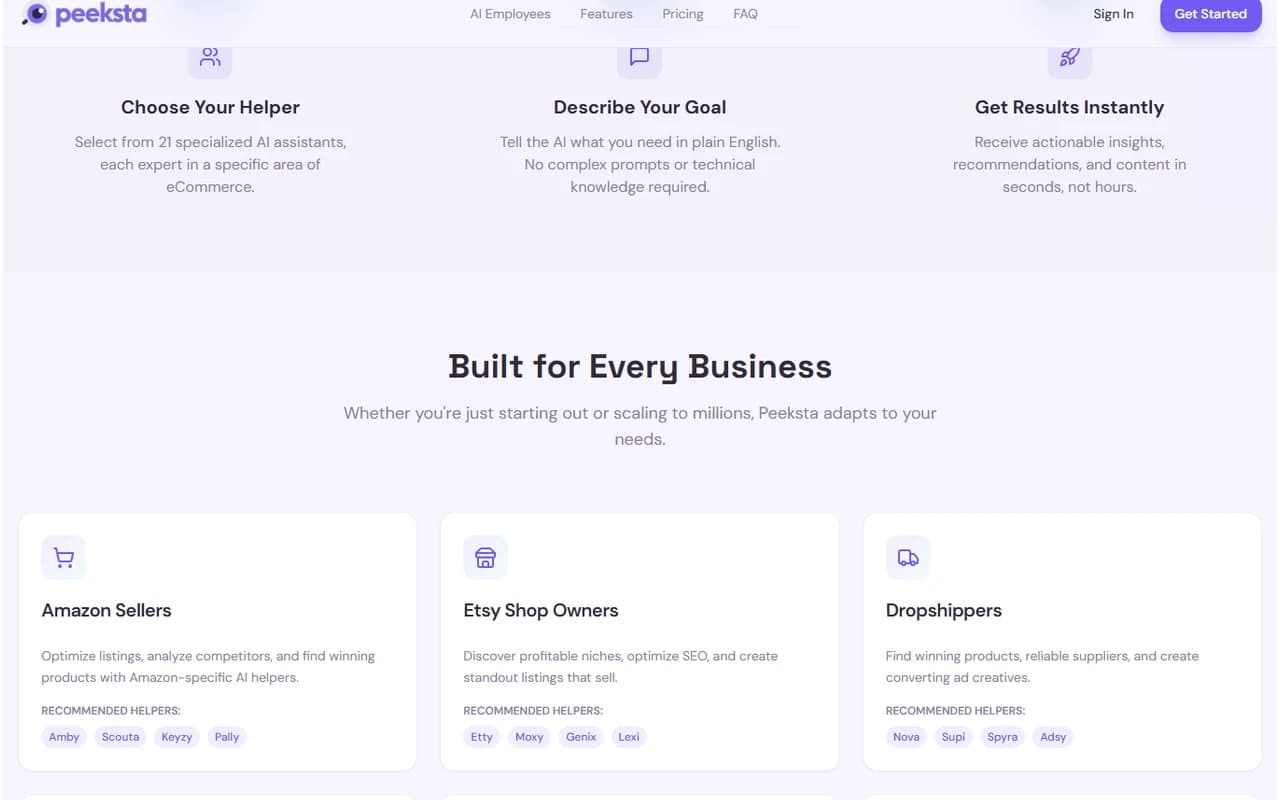
The official page recommends Nova, Supi, Spyra and Adsy for dropshippers. That is the exact combination to test before moving to Minea, Dropispy or ShopHunter.
Peeksta business sectionPeeksta becomes more useful when the routine stays short. Each helper should produce actionable information, not just a nice idea.
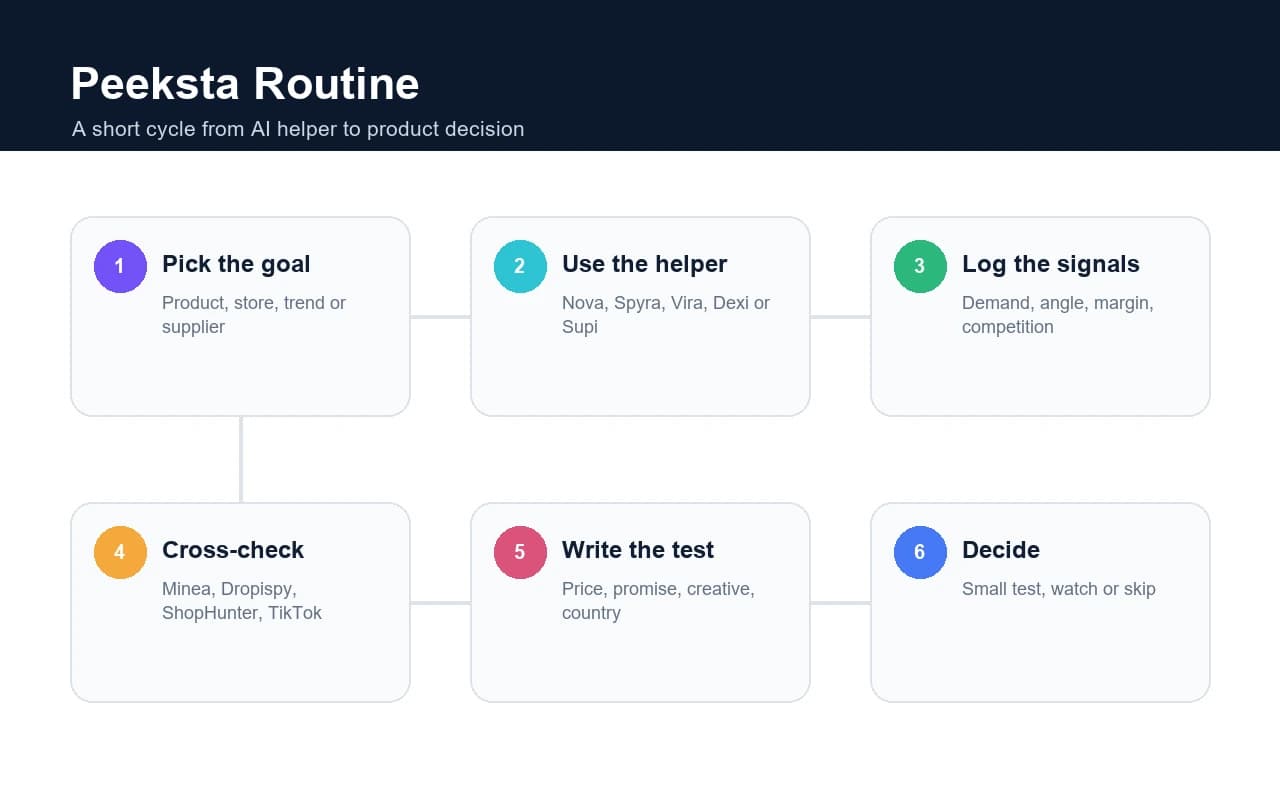
Start with a niche, country, season, margin constraint or customer problem. A wide request creates too much noise.
Keep three to five leads max, with purchase reason, likely price, target audience, seasonality and main risk.
Check whether ads already exist, which hooks repeat, which formats dominate and whether creatives look too similar.
A product can look promising but be too early, too late or too dependent on a short social spike. Write down saturation risk.
With Supi or other tools, review product cost, delivery, perceived quality, availability, possible bundle and returns.
The lead ends as a limited test, a watch item or a skip. The decision should include creative angle, target margin and the confirmation tool.
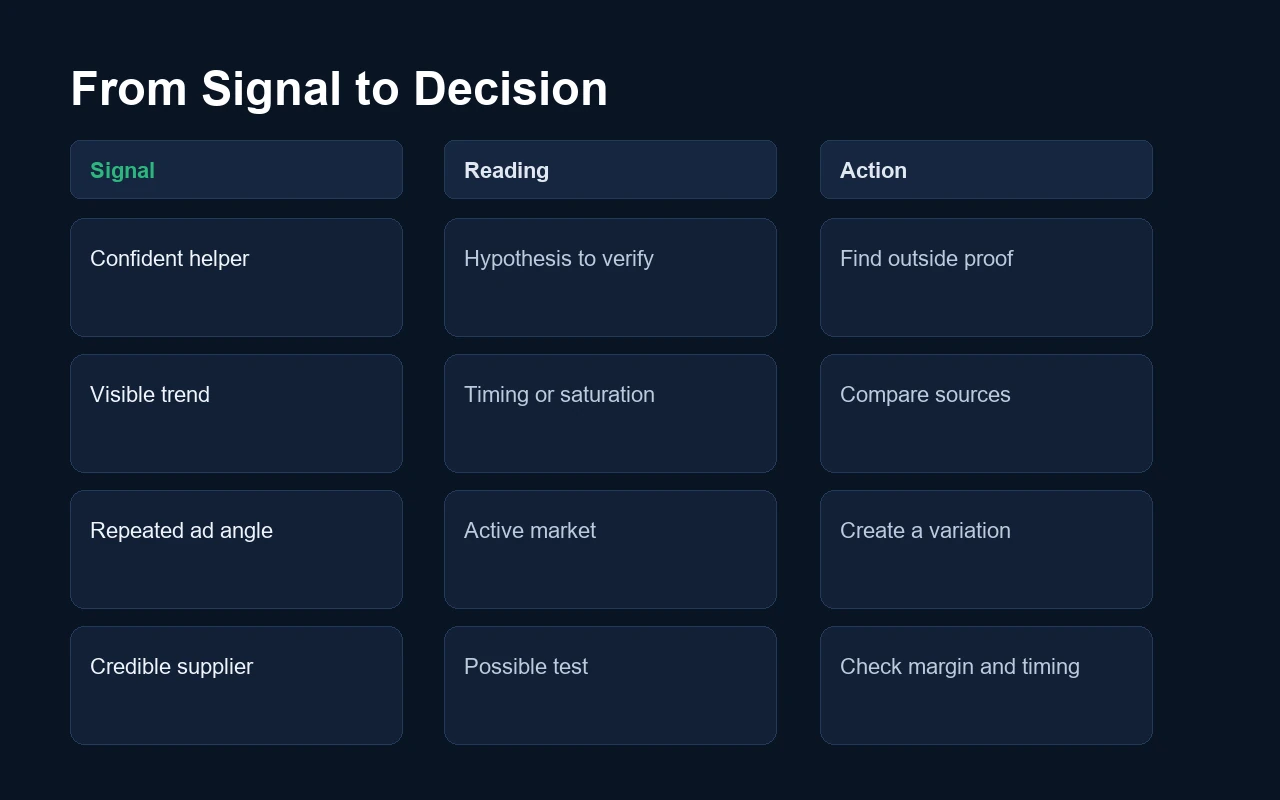
The trap with AI helpers is getting convincing answers without enough proof. This matrix forces every signal to lead to a concrete check.
Peeksta is especially useful for people who want to structure research while staying connected to market reality.
Move from a product idea to a qualified shortlist with ads, suppliers, creative angle and test decision.
Explore accessories, bundles or nearby categories without relying only on obvious social trends.
Prepare a client brief with product leads, ad angles, risks and tools to use for confirmation.
Understand the customer problem, main objection and demonstration style before filming.
Identify repeated angles and prepare cleaner creative variations for a limited test.
Spot product families to compare against queries, competitor content and RankerFox opportunities.
Peeksta gives useful hypotheses. Neighboring tools help verify ads, stores, creatives and demand signals before launch.
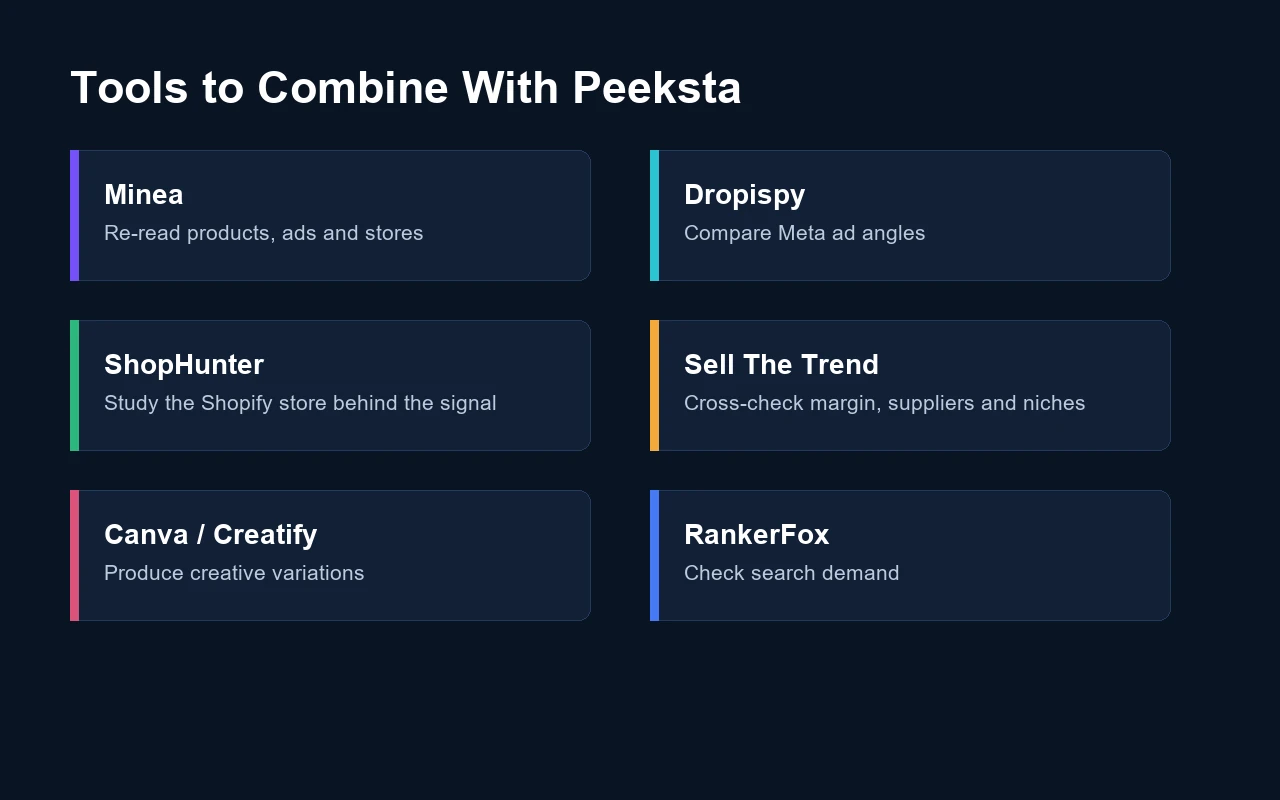
Cross-check products, ads, stores and ecommerce signals in a more visual environment.
Review Meta ads, repeated hooks and angles that may already be saturated.
Study the Shopify store behind a lead and understand nearby products.
Compare the lead with another product research view: suppliers, niches and margin.
Check TikTok Shop products, stores and advertisers around the lead before testing.
Explore a category and build a shortlist before asking Peeksta for a sharper angle.
Place Peeksta inside a full research, offer, creative and validation routine.
A Peeksta idea should survive a few simple checks before becoming a product page or campaign.
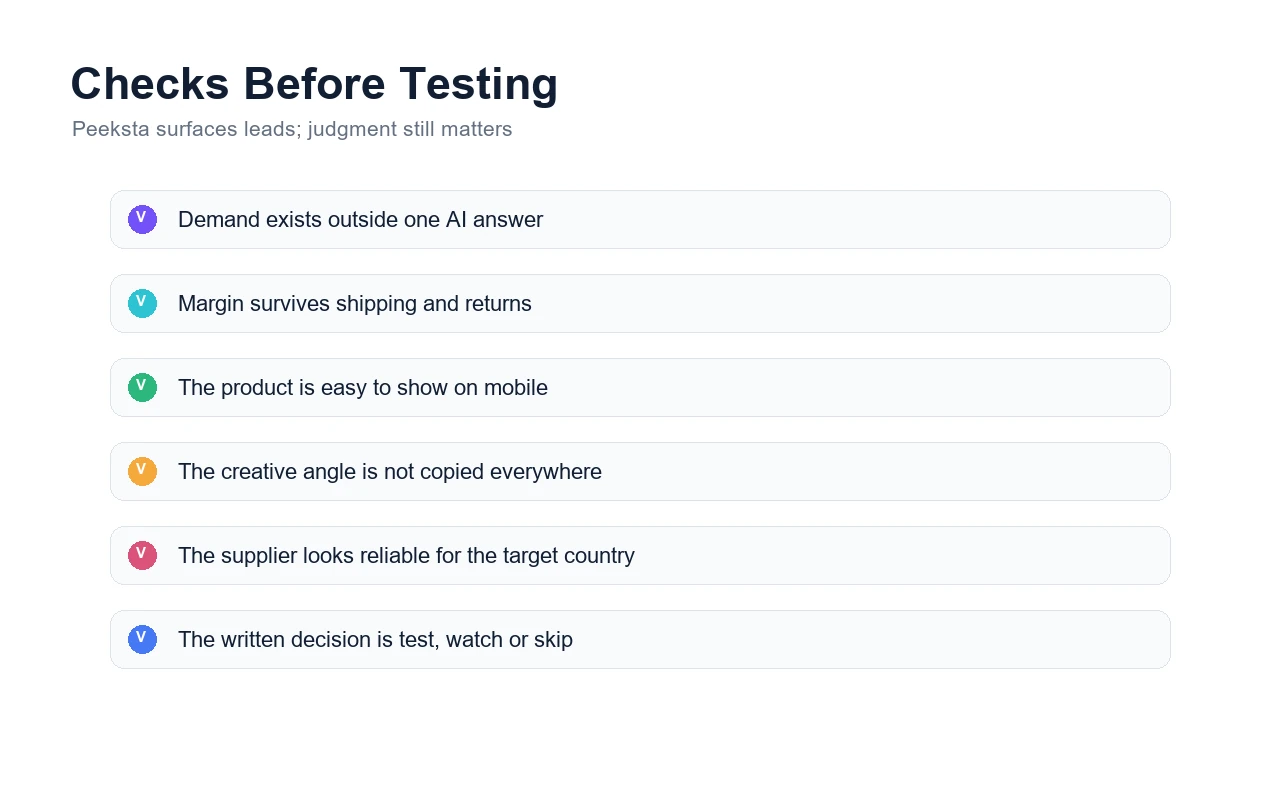
Demand exists outside one AI helper answer.
The product is understandable in less than five seconds on mobile.
Margin remains acceptable after shipping, discounts, returns and payment fees.
A credible supplier can deliver the target country within a reasonable timeframe.
Observed ads do not all use the same copied angle.
A variation in audience, bundle, demo or promise can differentiate the offer.
Yes, but the official site now presents it as a team of 21 AI helpers. For Spybox, Product Hunter, Ad Spyder, Trend Scout, Store Analyzer and Supplier Scout are the most useful product research roles.
No. Peeksta mainly helps frame and organize leads. Minea, Dropispy, ShopHunter, Sell The Trend and Kalodata help verify ads, stores and product signals.
It is not recommended. Margin, supplier, ad saturation, differentiation, product proof and creative feasibility still need review.
Use Peeksta to create a structured shortlist, then keep only the leads confirmed by other tools and by a realistic test calculation.
Spybox combines Peeksta with Minea, Dropispy, ShopHunter, Sell The Trend, Canva, Creatify, RankerFox and other tools to turn an idea into a test decision.
Open Spybox