
A product, store and ads positioning
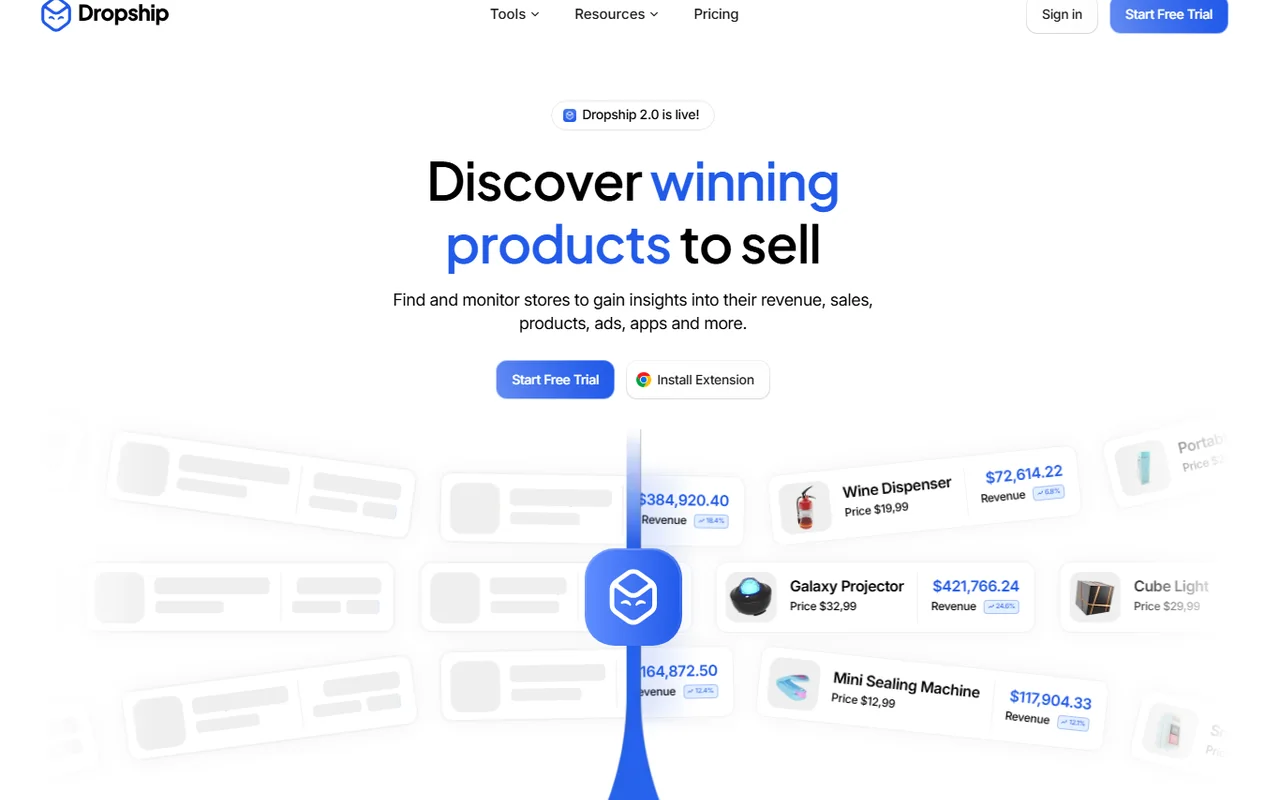
The homepage presents Dropship.io as a tool for finding products to sell and monitoring stores, revenue, sales, products, ads and apps.
Dropship.io homepageDropship.io helps research products, monitor TikTok Shop or Shopify stores, track Meta advertisers, read ads and organize product leads. Inside Spybox, the useful part is the cross-check: product, store, ad signal, margin and timing.

Product research
Dropship.io
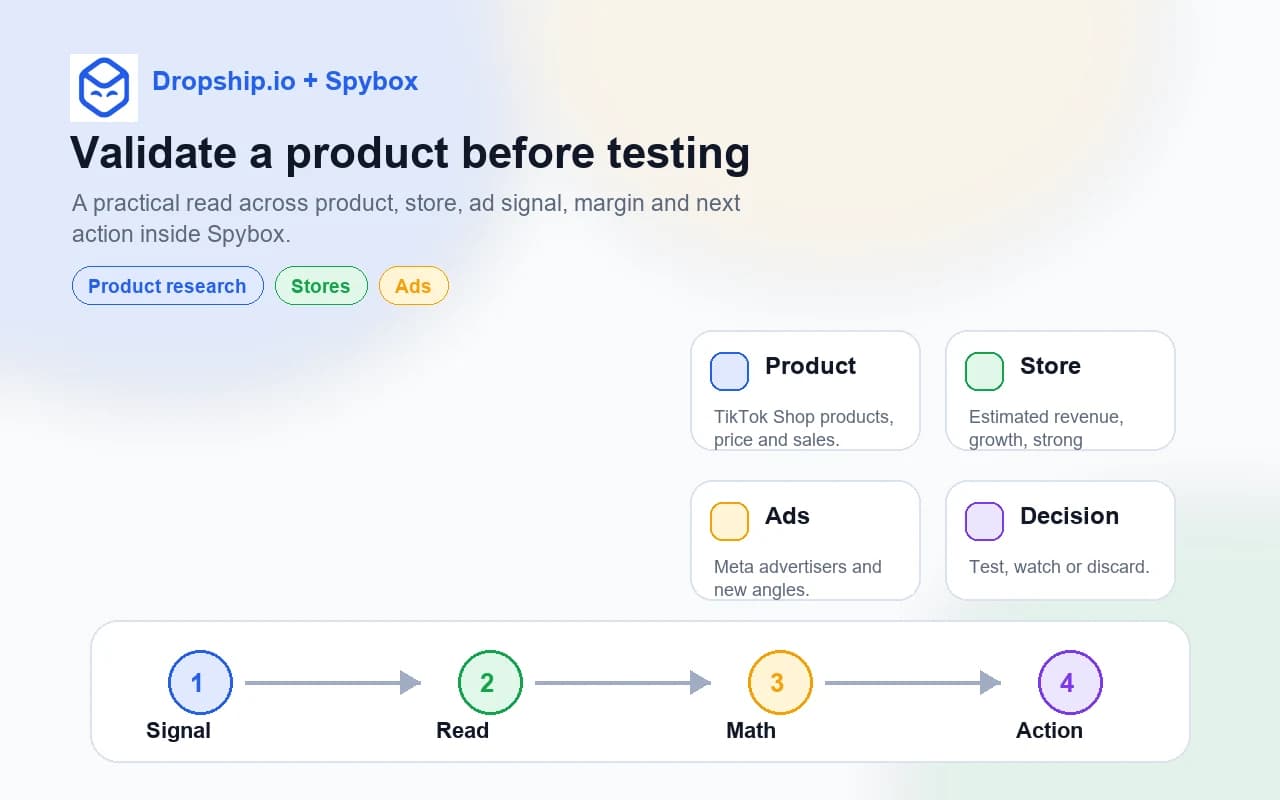
The practical Spybox read: spot a product lead, check whether stores and advertisers support it, run the math, then decide without treating a single estimate as proof.
10
product surfaces
The official site lists Sales Tracker, Portfolio, Shop Library, Ad Library, Product Library, Advertiser Tracker, Competitor Research, Advertiser Library, Magic AI Search and Creator Library.
40/week
product leads
The official pricing and help pages mention up to 40 winning products per week on direct Dropship.io plans.
100 000
SBC credits/month
Inside the Spybox offer at 29,99 €/mois, with premium tools available from the dashboard.
Dropship.io is useful when an ecommerce team wants to go beyond a single product seen on TikTok. It brings together TikTok Shop products, stores, ads, advertisers and weekly product drops, which makes it a good starting point for broader product research.
The best workflow starts with a market, not a favorite image. Pick a niche, filter products by price, sales, revenue or category, open the stores that look active, then check whether Meta advertisers or recent ads support the lead. Only then compare the signal with Minea, ShopHunter, Sell The Trend, Dropispy or Kalodata.
A session should not end with a huge list of ideas. It should end with a short call: limited test, watchlist, or discard. Dropship.io provides clues; Spybox helps cross-check them before building a product page, ad or UGC video.
Revenue, sales, ad spend or growth metrics in this kind of tool should be read as estimates and clues. Supplier, delivery time, net margin, product proof, creative saturation and differentiation still need review before launch.
Dropship.io touches several parts of the dropshipping workflow. It is not only about finding an idea; it helps decide whether a lead has enough surrounding signals to deserve a test.
Product Library and Sales Tracker help review sales, revenue, price, category and growth for a product or shop.
Shop Library and Competitor Research help read stores, offers, visible products and the way a competitor structures its page.
Ad Library and Advertiser Tracker help spot advertisers launching new ads and creative angles that repeat in a niche.
Portfolio and collections help keep leads organized, but the real value is the final call: test, watch or discard.
Official previews
These visuals come from official public pages and the Dropship.io help center. They show the surfaces to read before turning a lead into action inside Spybox.
The homepage presents Dropship.io as a tool for finding products to sell and monitoring stores, revenue, sales, products, ads and apps.
Dropship.io homepage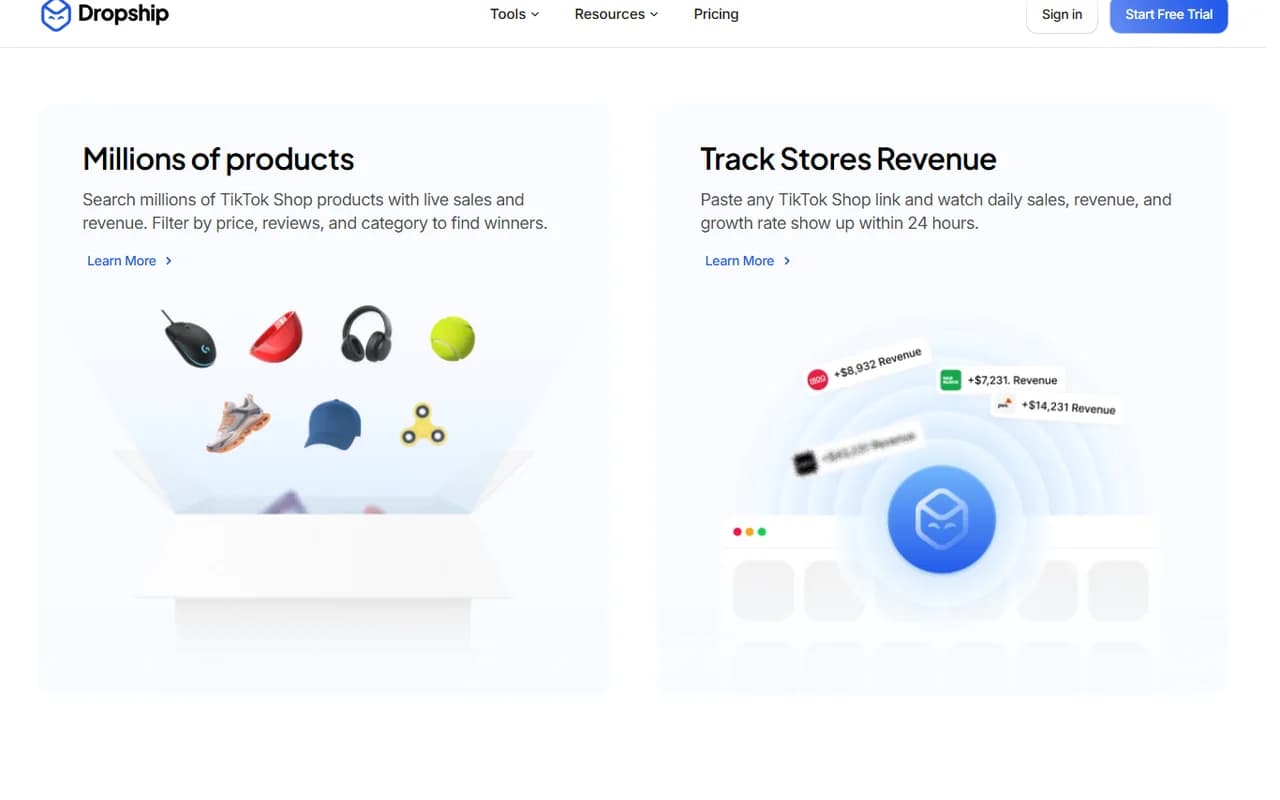
The public section highlights millions of TikTok Shop products, filters by price, reviews and category, then daily sales and revenue tracking for shops.
Dropship.io homepage
The official page shows advertisers being added from a Meta Ad Library URL and organized into collections. That is useful for monitoring new angles rather than copying the first ad seen.
Dropship.io homepage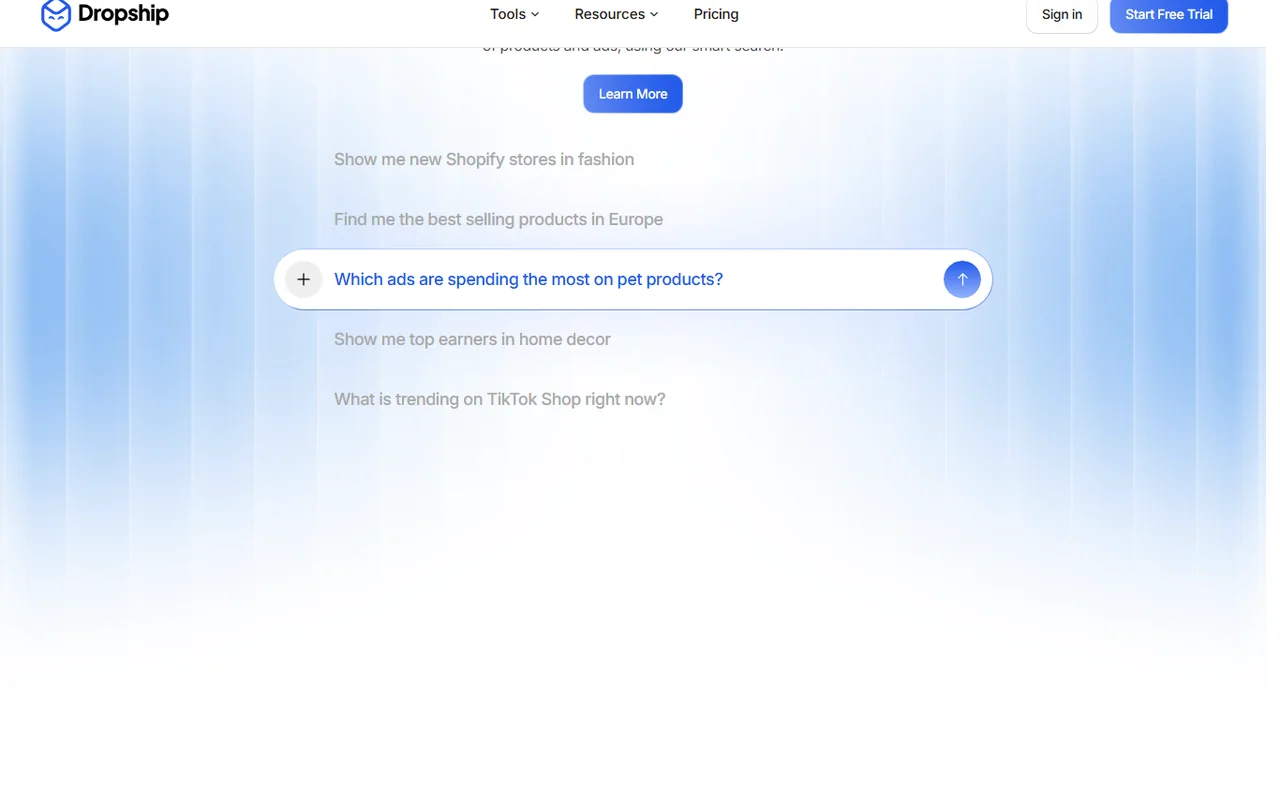
Magic AI Search shows natural-language search across products and ads, such as asking for best sellers in Europe, new Shopify stores or top spending ads in a niche.
Dropship.io homepage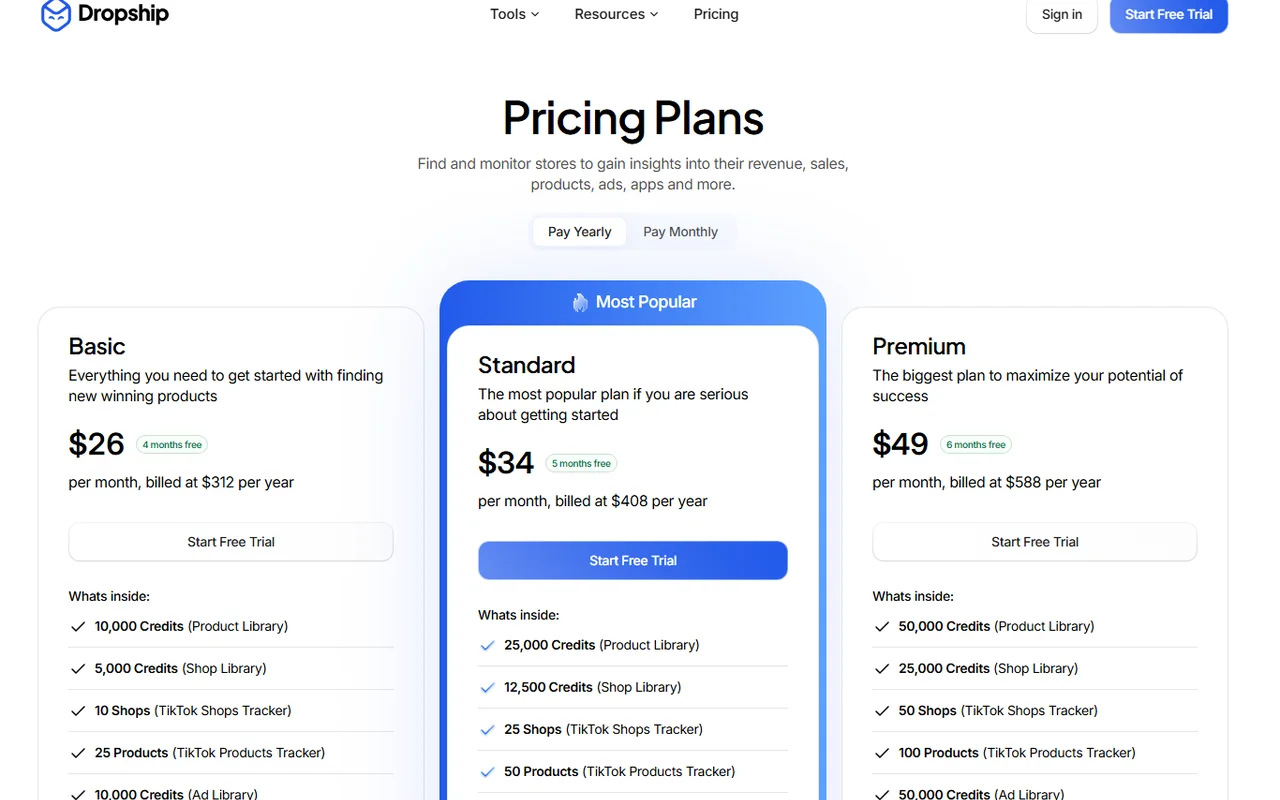
The official pricing page displays different direct-plan volumes: Product Library, Shop Library, Ad Library, Advertiser Library, trackers and AI Search credits.
Dropship.io pricing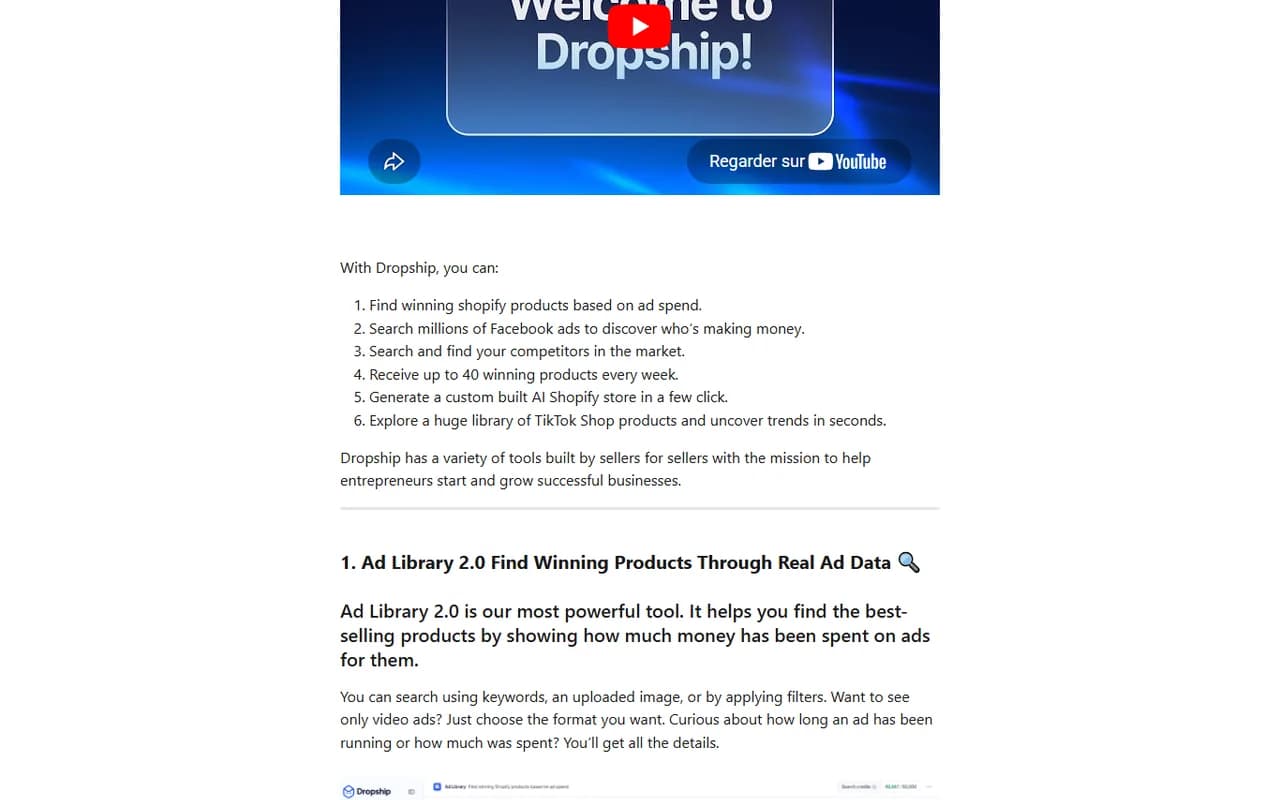
The documentation describes Ad Library as a way to search with terms, an image or filters, then read ad spend, reach, active days, product price and advertiser details.
Dropship.io 2.0 help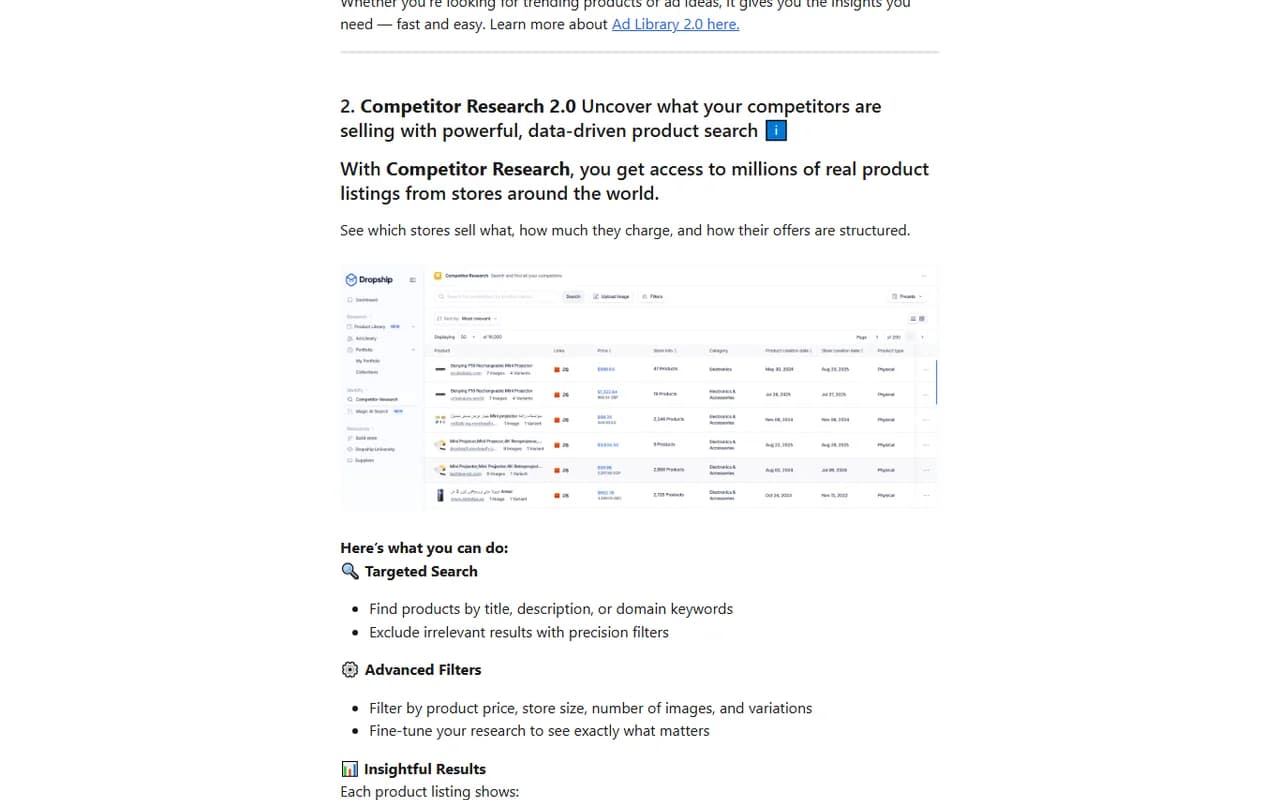
The help center presents Competitor Research as a way to search product listings and stores, with pricing, links, categories and margin calculations to review before a test.
Dropship.io 2.0 helpThe best routine is short. It should prevent idea hoarding and force every lead through product, store, ad, calculation and decision.
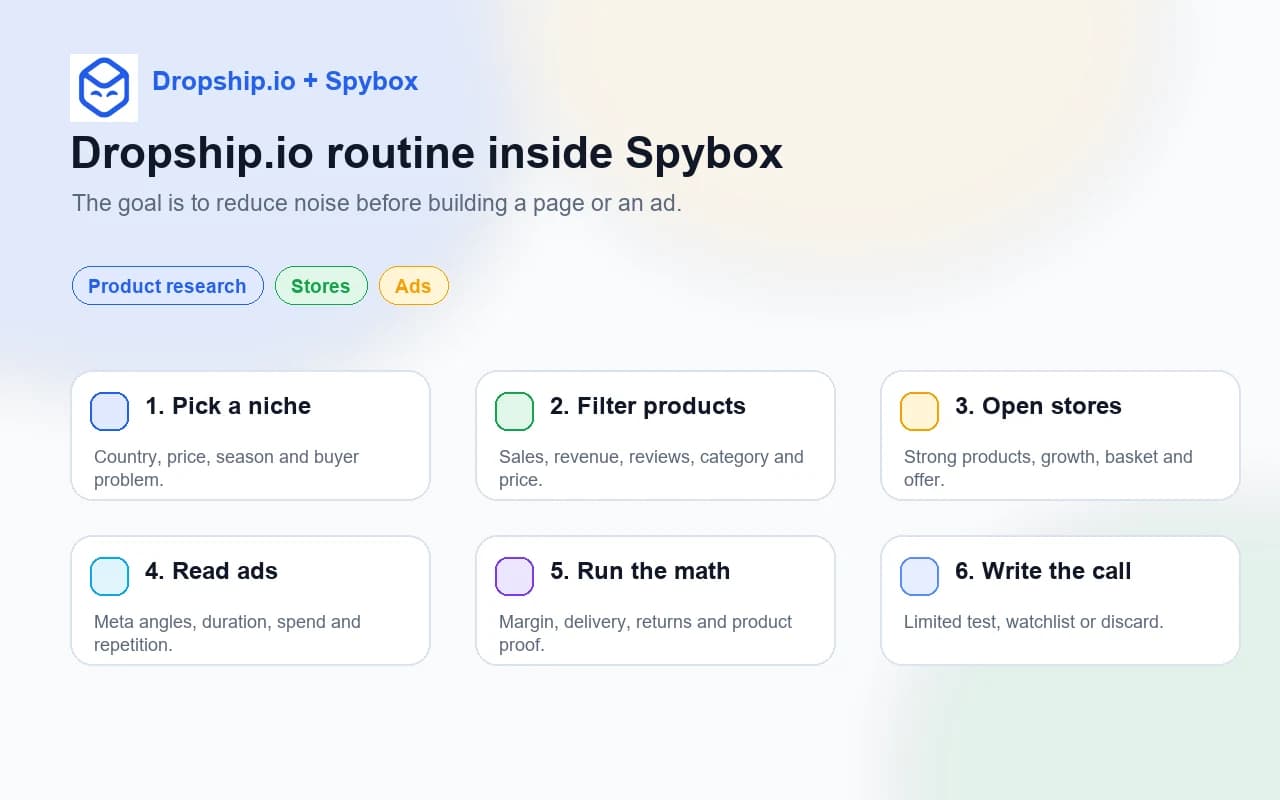
Start with a niche, country, season or buyer problem. A search that is too wide creates noise and few decisions.
Look at estimated sales, revenue, price, reviews, category, publish date and related products in the same family.
A promising store should show a readable offer: product page, bundle, price, promise, proof, variants and complementary products.
Classify the ad angles: demonstration, solved problem, comparison, before/after, urgency, social proof or gift.
Before building a page, estimate product cost, shipping, discounts, returns, payment fees, average order value and customer-facing price.
The lead becomes a limited test, watchlist or discard. The call should name the main signal, main risk and next tool to use.
Dropship.io gives many clues. This matrix keeps one visible number from becoming the whole argument.
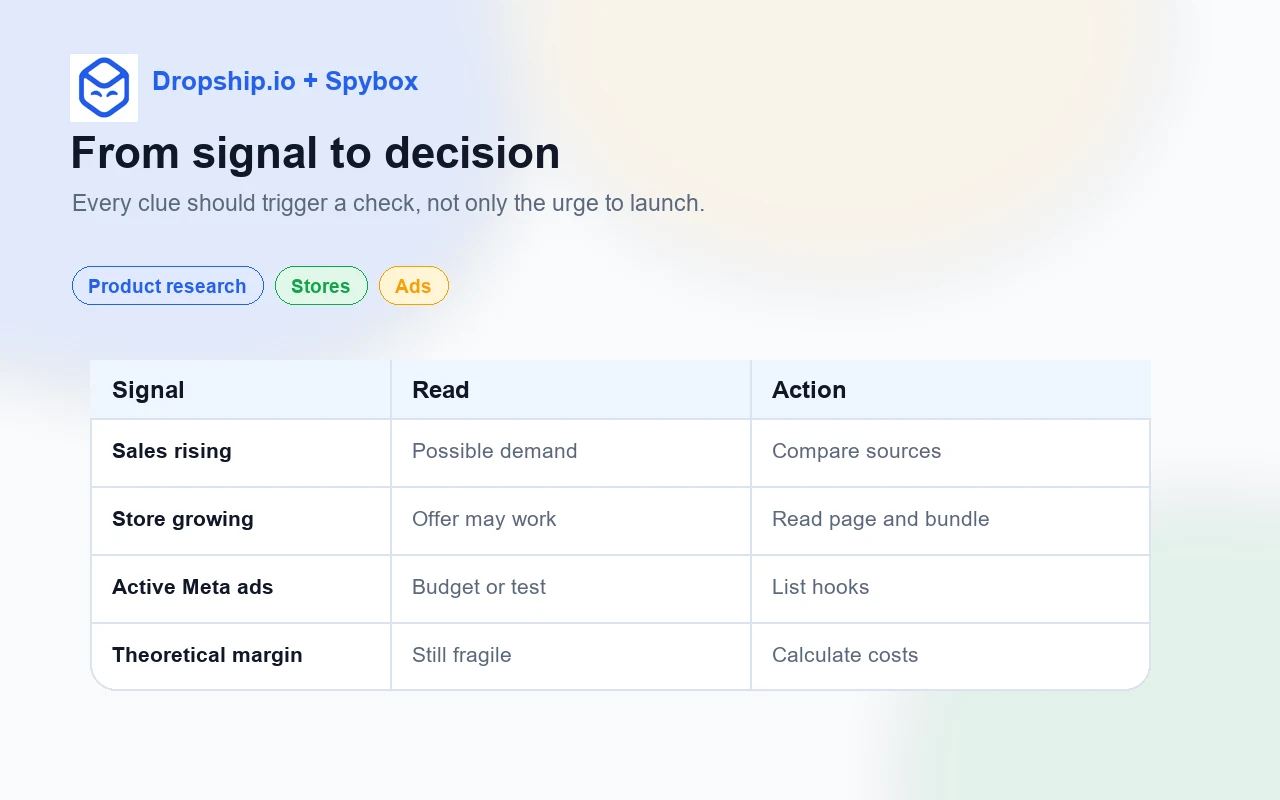
The tool is strongest for people who must choose between several product leads quickly while still checking stores, ads and numbers.
Build a product shortlist, check stores, read active ads and decide which limited test comes first.
Spot accessories, bundles or complementary products near an existing catalogue.
Document client research with products, advertisers, hooks, saturation risk and the next creative to test.
Follow advertisers that launch new ads and identify hooks that keep returning in a niche.
Understand the product, use case, objections and visible angles before writing a short demonstration.
Identify product families to compare later against search queries, comparisons and content opportunities.
Dropship.io works best as a starting point, then another surface confirms or challenges the lead.
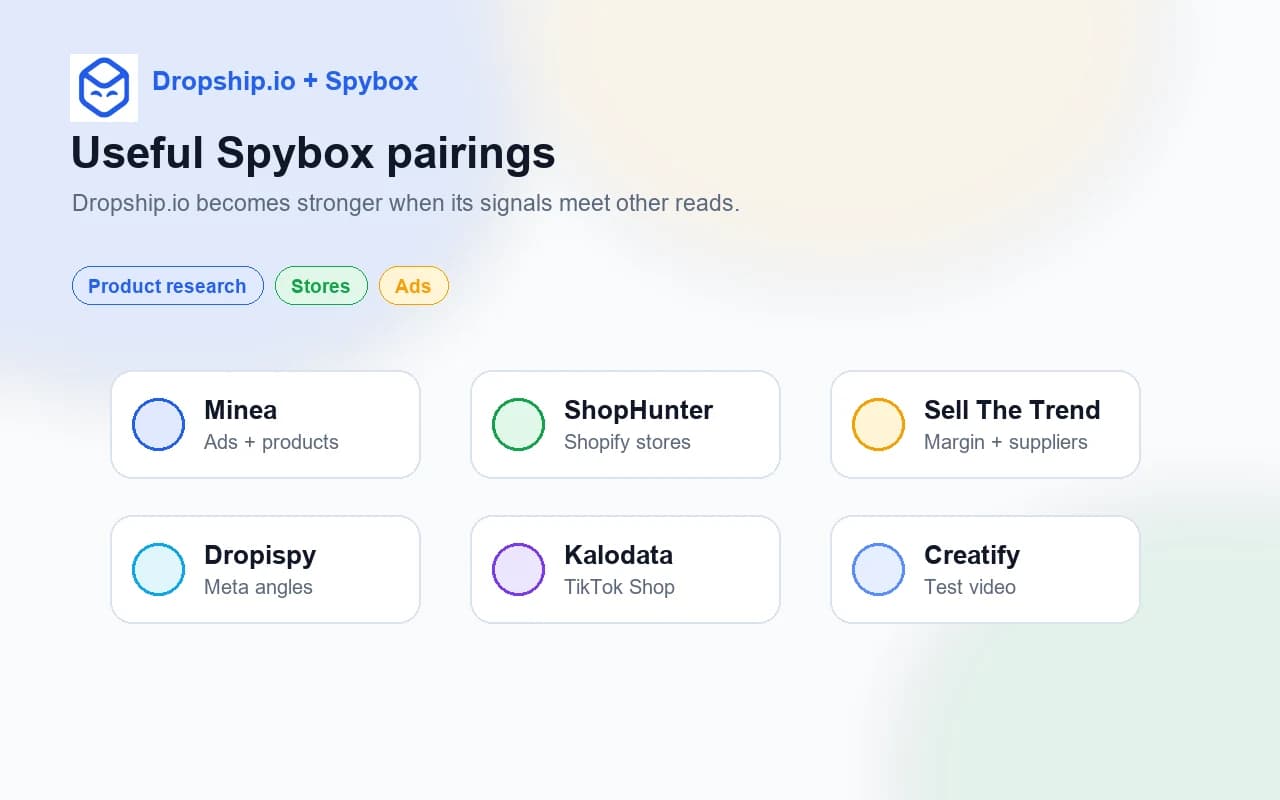
Cross-check products, ads, stores and ecommerce signals through a highly visual product research surface.
Analyze the Shopify store that seems to carry the product and read its neighboring products.
Read Shopify stores, themes, traffic and visible products before keeping a lead.
Compare the lead with another view of niche, margin, suppliers and winning products.
Open a niche-based search and compare products before keeping a shortlist.
Turn the lead into sharper questions about trend, ads, supplier and product angle.
Check TikTok Shop signals, creators, lives and competing products.
Review Meta ads, repeated hooks and angles that may already be crowded.
Place Dropship.io inside a broader product, offer, creative and validation routine.
A Dropship.io lead should pass a few practical checks before becoming a product page or ad.
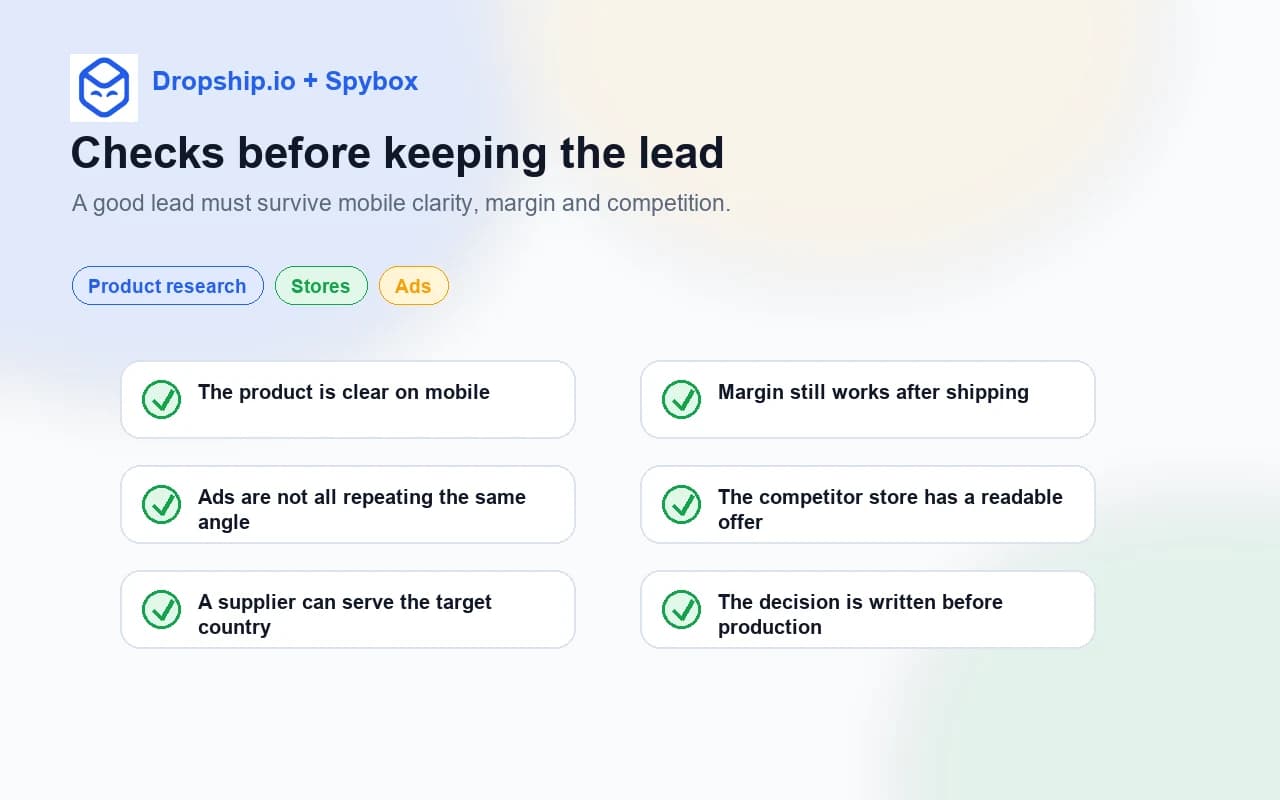
The product is understandable in less than five seconds on mobile.
Margin still works after shipping, discount, returns and payment fees.
The competitor store has a readable offer, not only an isolated product.
Visible ads are not all repeating the same crowded angle.
A credible supplier can ship to the target country within an acceptable delay.
A bundle, audience, demonstration or promise variation can differentiate the offer.
Dropship.io is listed among Spybox Product Research tools. Exact access depends on the dashboard, credits and tools available in your session.
No. Dropship.io helps connect products, stores and advertisers. Minea, ShopHunter, Sell The Trend, Kalodata and Dropispy provide other reads to confirm or discard a lead.
It is not recommended. The tool can surface a lead, but margin, supplier, ad saturation, product page and creative quality still need review.
Use Dropship.io to build a shortlist, then keep only the leads that pass demand, store, ad, margin and differentiation checks.
Spybox combines Dropship.io with Minea, ShopHunter, Sell The Trend, Dropispy, Kalodata, Canva, Creatify and other tools to move from product idea to test decision.
Open Spybox