
Promo code GET25Check the code

Updated October 3, 2026

Dropshipping workflow with Spybox

A six-step routine for moving from an idea to a first test: what to research, prepare and check before paying for ads. Includes a checklist and an example followed through to the order review.

Contents

Six steps and what to have at the end

You can draft copy while waiting for the sample. Keep specifications and promises provisional until you have checked them.

1. Define the research
What to prepare
A record of audience, use, country, item and comparable offers.
Before moving on
You know what you are comparing and what remains unknown.
2. Study ads
What to prepare
An annotated selection of messages and demonstrations.
Before moving on
You have an idea to film yourself, not an ad to copy.
3. Check the supplier
What to prepare
Quote, sample, observed delivery times and cost calculation.
Before moving on
The product and shipping support the offer you plan to make.
4. Prepare content
What to prepare
A product page and creatives describing the same bundle.
Before moving on
Photos, copy and video describe what will actually be delivered.
5. Test the journey
What to prepare
A test order and a written advertising plan.
Before moving on
Payment, delivery, measurement and spending limits are checked.
6. Review results
What to prepare
Spending, orders, issues and a dated decision.
Before moving on
You select a specific change, or stop the offer.

Start with one offer to investigate

This routine suits a first store or a new product in an existing one. It is not about opening every available tool: start with a question, prepare a specific offer, then decide whether it deserves a test. If your store already receives orders, review customer objections and delivery problems first. Finding another product may not be the priority.

Spybox supports research and content preparation here. Your store, supplier and advertising account handle orders, shipping and paid delivery. PiPiAds helps you study ads; it is not the campaign manager where you launch your campaign.

Keep one folder per offer: product information, links reviewed, quotes, sample photos, copy, videos and results. Date your observations. When you resume a few days later, you should find the exact item and conditions you investigated, not just the memory of an interesting ad.

  • Define an audience, a use case and a selling country.
  • Choose a specific item and bundle, not an entire category.
  • Separate research spending from money reserved for orders and advertising.
  • Assign responsibility for each task, even if you handle all of them.

1. Define the product research

Write down the need first. 'Keep cables organised in a work bag' is more useful than 'sell a trending accessory'. Specify who has this problem, in what situation and with which constraints. An office pouch is not automatically comparable to a travel case for a laptop.

In PPSPY or Minea, find similar offers, then open their public pages. Record the package contents, dimensions, price, displayed shipping charges and objections addressed. Estimated orders can guide research; they cannot establish your store's profitability.

Narrow your selection once you have useful comparisons. For a deeper look at demand, use the market research guide linked below. The outcome here is an item to investigate with a supplier, not certainty that it will sell.

  • Record the URL, date, country, currency and bundle contents.
  • Separate what you observed from what the tool estimates.
  • Write down the unanswered question: size, durability, delivery or audience interest.

Keep : A short product record with comparable offers and missing information.

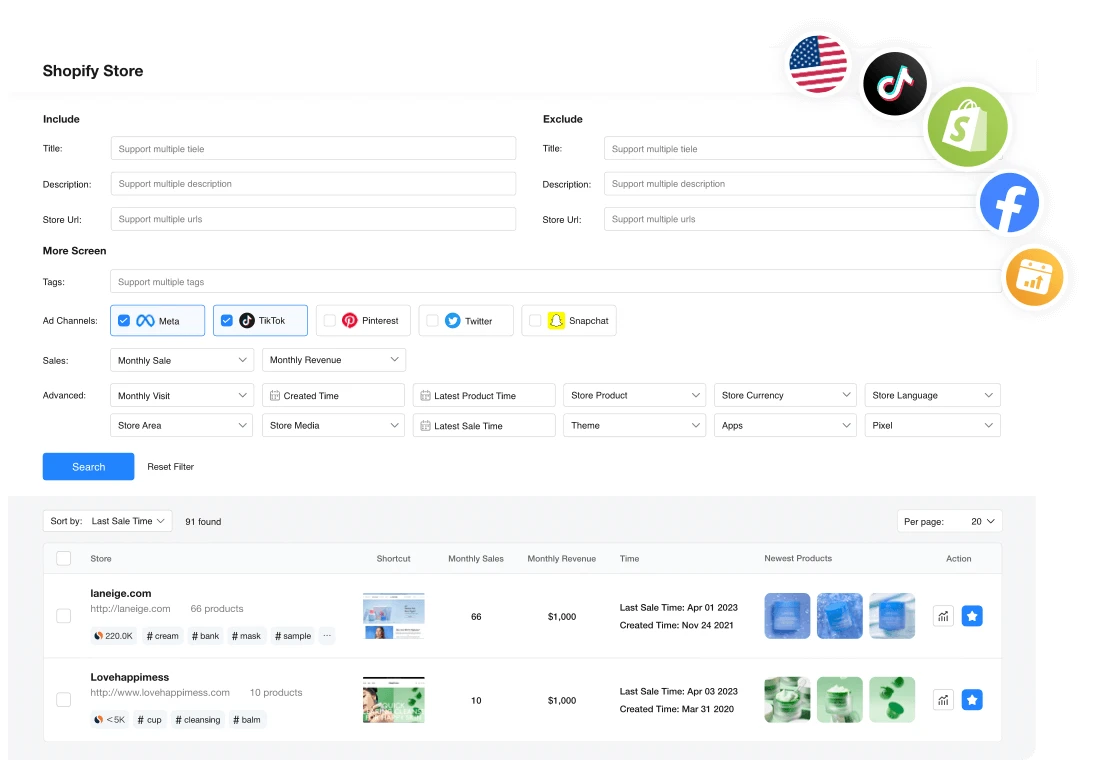
Public PPSPY illustration of Shopify search filters and matching stores

PPSPY: start with a comparable store

This older preview shows store, language and channel filters. Keep the merchant link to check the bundle and displayed terms. Its 2023 dates and illustrative figures are not a current opportunity or results from your project.

2. Turn ad research into a demonstration idea

Search for the same use case in PiPiAds, Adsparo or a public ad library. For each selected ad, describe the opening scene, action shown, question addressed and destination. A message about speed is useful only if you can explain what actually becomes faster.

Group ads by message rather than view count. Two videos may repeat the same demonstration; keeping both does not necessarily add an idea. Look instead for what your product can show and what competing offers explain poorly.

A high advertiser count alone does not predict your cost per click. An old ad does not prove that viewers are tired of it either. Choose a specific test question: does showing the organised bag explain the use better than opening on the mess? Film your own footage and use only content you have the rights to use.

  • Describe the message in your own words, without taking a competitor's slogan.
  • Prepare a scene you can film with your sample.
  • Keep public observations separate from the test hypothesis.

Keep : A demonstration script and a variant changing one identifiable element.

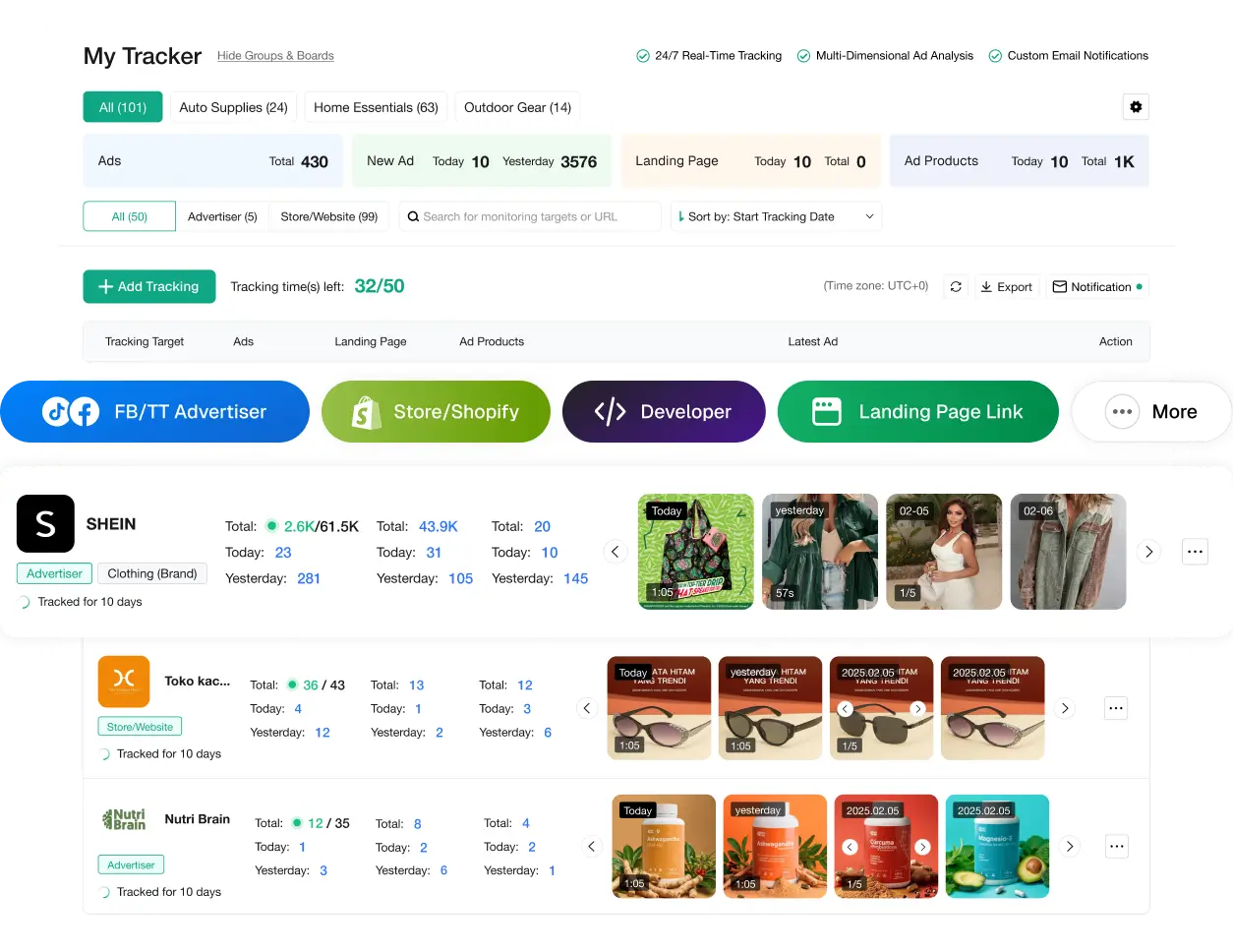
Public PiPiAds demonstration of advertiser tracking and advertising variations

PiPiAds: find an ad's variations again

The tracking panel brings advertisers, dates and creatives together. It helps you find an example to analyse; its counters do not establish margins or sales for your future offer. Your own delivery results will come from your advertising account.

3. Receive the sample and cost the exact offer

Request a quote for your chosen item, quantity and country. Clarify packaging, transport, availability and the procedure for defects. Receive a sample before promising performance or funding a campaign. A catalogue photo does not reveal a sticking zip or weak stitching.

Measure and photograph the delivered product. Try it in the situation you plan to film, with the actual objects used in your demonstration. Record shipping and arrival dates too. One order informs your trial; it cannot guarantee the same delivery time for every customer.

Calculate contribution per order after product, shipping, payment and an allowance for incidents, on a consistent tax basis. There is no universal minimum margin of €20. Advertising headroom depends on your costs and the fixed expenses to cover. The dropshipping guide includes a detailed calculation; repeat it with your quote, then recalculate if the bundle or rate changes.

  • The received item matches the quote and planned product page.
  • You can film the use without concealing a defect or missing accessory.
  • Delivery, returns and availability are clarified with the supplier.
  • Variable costs and a cash reserve are recorded before the advertising budget.

Keep : A sample review, a dated quote and your per-order calculation.

4. Prepare a consistent product page and creatives

Give ChatGPT confirmed information: dimensions, material, package contents, use and limitations. Have it draft a description and script, then compare every statement with the sample and quote. Remove unsupported specifications, fake reviews and benefits you cannot demonstrate.

Film the real product first. For a pouch, show what fits, how it closes and how much room it takes in the bag. Animation or a generated setting must not imply a capacity, result or finish that does not exist. Keep original footage so you can revise the edit without repeating the entire shoot.

Use Canva to prepare the formats needed for your chosen channel. In Submagic, review captions and check that text does not cover the object being shown. Watch the video without sound and open the page on a phone as a customer: are the bundle contents, price and delivery clear? Give each version a different name so you can identify the one actually used in the campaign.

  • Keep the same item, quantity and promise in the ad and on the page.
  • Use your own photos and footage, or material used with permission.
  • Keep text readable on a phone, captions corrected and the product visible.
  • Name a distinct variant instead of making many changes that cannot be compared.

Keep : A reviewed page, original files and exported versions for the test.
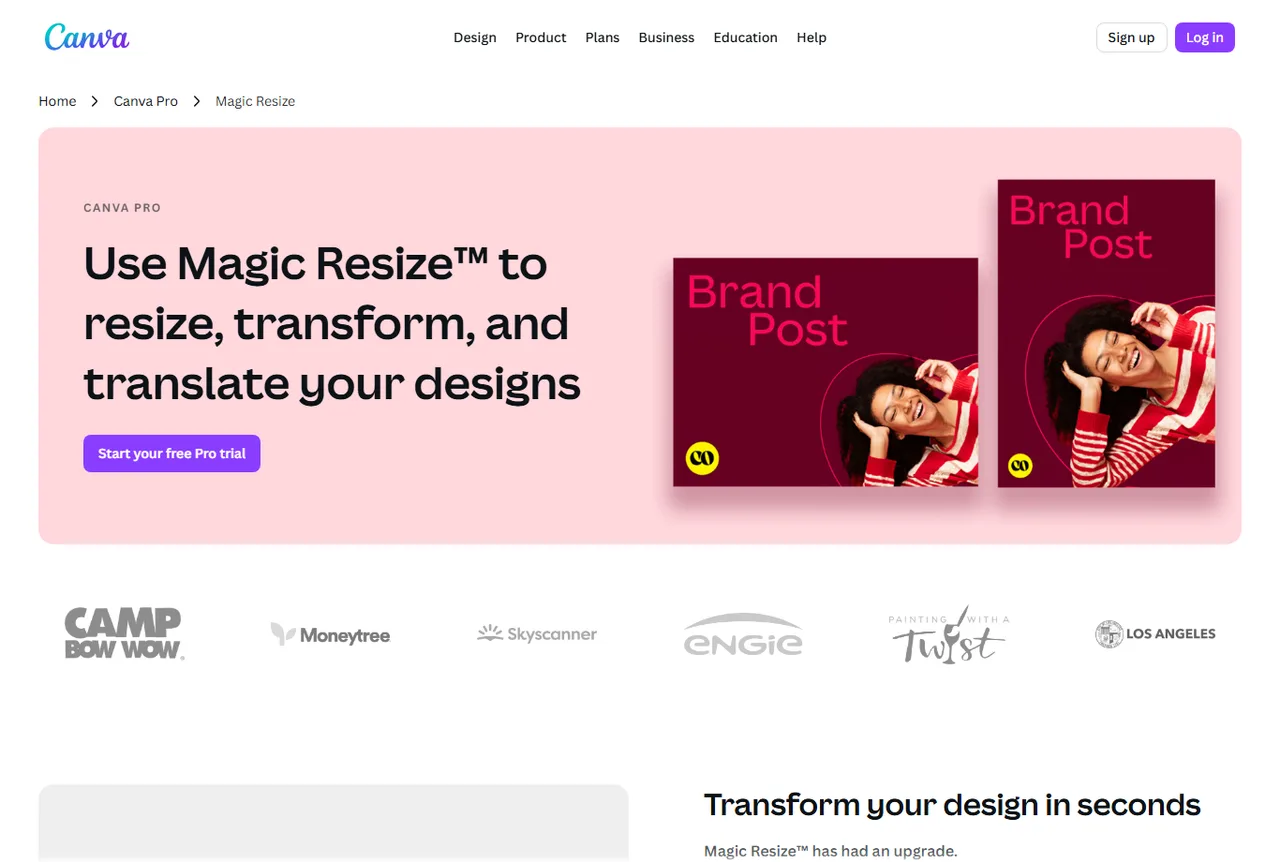
Public Canva Magic Resize marketing page showing one design in different formats

Canva: adapt the format, then check the framing

This public capture presents design resizing. After adapting it, check your photograph, price and the channel's safe areas. A format change does not guarantee that every line remains readable in the final ad.
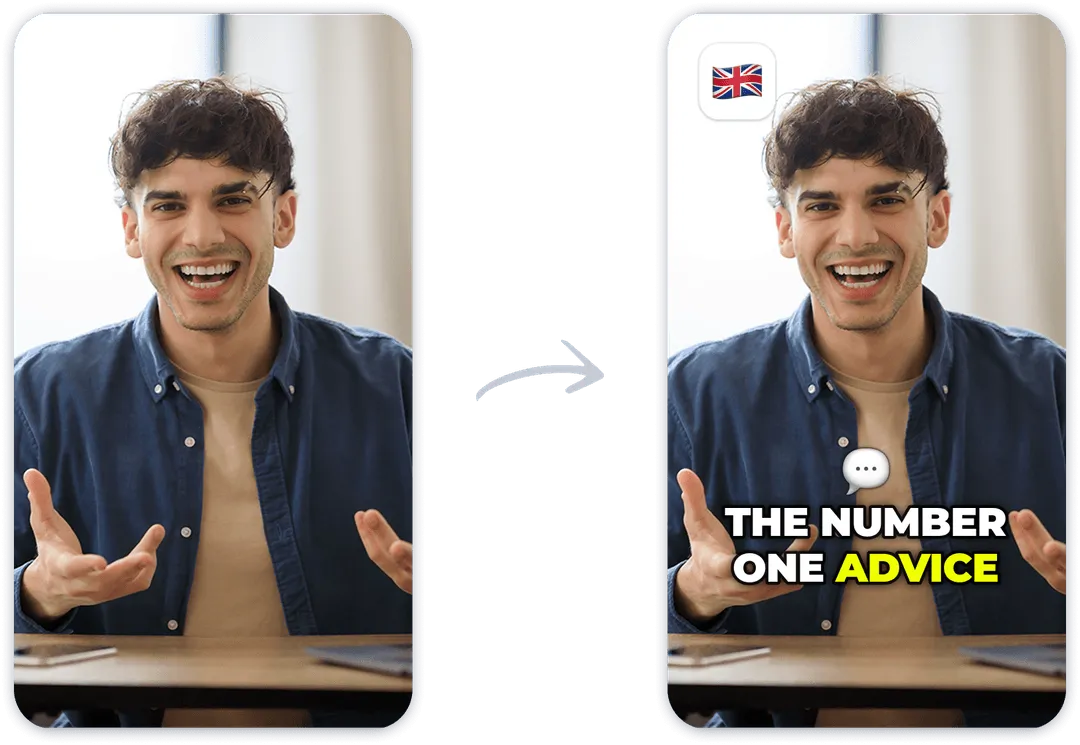
Official Submagic illustration before and after adding captions to a vertical video

Submagic: make the demonstration clear without sound

The public example shows captions being added, not an ad from our exercise. Review the transcription of your own video and avoid covering the zip, dimensions or item being handled. Effects matter less than what the customer needs to see.

5. Test the journey before paying for ads

Go through the store on a phone: open the page, select the bundle, add it to the cart and check out. Verify the total, delivery choices and confirmation messages. Then check that the order reaches your supplier process and that tracking can be sent to the customer.

Shopify documents several test-order methods. Choose one suited to your setup; a real transaction followed by a refund can leave fees. If you enable a test payment mode, disable it before accepting real orders. Keep the check result without publishing customer data.

Write the plan before launching in your chosen channel's advertising manager. Record the country, destination, objective, creatives, spending ceiling and review conditions. Check measurement and consent for your market and setup. Account requirements and platform minimum budgets remain separate from a Spybox subscription.

  • No item, discount or shipping mismatch between the page and cart.
  • Payment and order transmission checked; test mode disabled before real sales.
  • Destination and measurement events verified without mistaking a test for a paid order.
  • Maximum spending and reasons to stop written down, without a universal three-day rule.

Keep : A checked order journey and a test plan you can review after delivery.

6. Connect advertising results with delivered orders

At your planned checkpoint, record advertising spending and store orders for the same period. Identify cancellations, refunds and unpaid orders. Competitive research tools cannot replace these records. Acquisition cost relates spending to the orders counted; always state which orders and which source attributes the sale.

Follow orders through the supplier process: acceptance, dispatch, tracking, delivery and support requests. A first sale does not prove the offer works if the parcel is late or the product needs refunding. Keep costs and incidents long enough to update your initial assumptions.

Choose the next action. If payment fails, fix it before producing more videos. If a dimension causes confusion, improve the relevant photo and copy. If contribution remains inadequate with verified costs, stop or change the offer; opening more tools will not fix its economics.

  • Use the same period, bundle and counting rules in the review.
  • Distinguish attributed sales from paid and delivered orders.
  • Keep a dated decision and one priority change for the next round.

Keep : A review connecting spending, orders, customer service and the next decision.

Worked example: a pouch for cables and chargers

This is a fictional exercise, not a customer store case study. The offer is a storage pouch sold on its own, without cables or a charger. The chosen audience carries accessories between home and the office. The decisions below illustrate the routine; no sales or performance figures have been invented.

Research
What you prepare
Compare pouches sold on their own and record displayed dimensions.
Question to answer
Does the customer want to organise accessories or protect a device?
Ad research
What you prepare
Observe how ads show storage and transport.
Question to answer
Are package contents clear, or do the accessories shown create ambiguity?
Sample
What you prepare
Photograph the pouch open, filled and closed.
Question to answer
Does it hold the objects in your demonstration without forcing the zip?
Content
What you prepare
State 'pouch only', show dimensions and film your own accessories.
Question to answer
Can a visitor understand the size and what is included?
Test
What you prepare
Compare an opening on the messy bag with an opening on the organised result.
Question to answer
If only the opening scene changes, are the rest of the video and offer identical?
Review
What you prepare
Connect spending, orders and questions about size or delivery.
Question to answer
Should the next change address the opening, product information or supplier?

If the sample does not close around the charger shown, do not edit the video to hide the problem. Choose another item or change the use presented. If the product suits the use but checkout adds unexpected charges, fix that stage before concluding that the ad is poor.

Keep the copy, edit, page and delivery date for every version. If price, bundle and video all change together, the review cannot tell you which change explains the difference. When volume is too low to decide, record the uncertainty rather than declaring a winner.

Checklist before paying for ads

Repeat this list for every offer and after a supplier, bundle or payment change. Resolve a blocking issue before launch; a finished video does not make it acceptable.

  1. The received product matches the advertised item and package contents.
  2. Quote, delivery, returns and availability are documented.
  3. Per-order costs and required cash reserves are recorded.
  4. Images, demonstration and copy describe the real product.
  5. Price, quantity and terms stay consistent from ad to checkout.
  6. A test order confirms the journey; test mode no longer prevents real sales.
  7. The advertising account, destination and measurement are checked.
  8. The spending ceiling, checkpoint and reasons to stop are written down.

Read the first results without changing everything at once

These situations suggest checks, not automatic diagnoses. Measurement errors or just a few orders can give a misleading picture.

Clicks, few measured visits
Check first
Final URL, opening on a phone, loading and measurement.
Possible action
Fix a link or technical journey before remaking the creative.
Visits, no cart additions
Check first
Bundle contents, size, price, shipping and consistency with the ad.
Possible action
Clarify missing information; do not immediately assume price is the sole cause.
Carts, few paid orders
Check first
Late fees, payment methods, errors and abandoned checkouts.
Possible action
Test payment and show conditions earlier where needed.
Orders, but delivery incidents
Check first
Transmission, supplier acceptance, stock and parcel tracking.
Possible action
Handle existing orders before increasing spending.
Delivered orders, little contribution
Check first
Advertising, discounts, shipping, refunds and other costs.
Possible action
Recalculate the offer; reduce, change or stop the test based on actual costs.

Write a short review: what was spent, what was paid and delivered, known incidents and the decision. A favourable advertising ratio is not a profit by itself. Keep fixed expenses and possible future returns in your tracking.

Return to research when you have a new question: an objection to explain, a use to show or a competitor to investigate. This avoids restarting all the research after each campaign.

Budget for tools separately

The Spybox offer presented on this site brings together 90+ tools with 100,000 SBC credits per month. Displayed pricing is €29.99/month or €249.99/year. The site's pricing verification dates from August 4, 2026; check current terms before payment.

The code GET25 is the one presented on this site. Check its discount in the summary before paying. The subscription does not cover samples, your store, advertising, suppliers or order costs. Also check which tools and capabilities your access includes before planning work that depends on them.

Questions about the dropshipping workflow

Do I need every Spybox tool for each product?

No. Choose a research starting point, then add a complementary tool if a question remains unanswered. Content, suppliers and the order journey require their own work; more searches cannot replace these checks.

Can I start the page before the sample arrives?

Yes, you can prepare its structure and quote information. Keep unverified specifications provisional. Demonstration photos and usage promises must match the product actually received.

Can I launch the campaign in PiPiAds?

PiPiAds supports ad research here. Delivery and spending are managed in your advertising account on the chosen platform. Its account requirements and budget are not included in a Spybox subscription.

How much margin do I need before advertising?

There is no universal €20 threshold. Calculate what remains after product, shipping, payment and incidents, then allow for acquisition and fixed expenses. Repeat the calculation if price, bundle or supplier changes.

What budget and duration should the first test have?

Set a ceiling based on costs, cash reserves and platform requirements. Write the checkpoint and reasons to stop before launch. A fixed sum per video or a three-day duration does not automatically suit every offer.

Can I reuse a competitor's video?

Analysing an ad does not give you permission to republish it. Film your product or use authorised media. Generated content must not invent a specification, testimonial or usage result.

What should a test order check?

The bundle, total, delivery choices, payment, confirmation and transmission to the supplier. Choose a method suited to your store. On Shopify, disable test payment mode before accepting real orders.

Is a first sale enough to increase the budget?

No. Check costs, measurement, paid orders, delivery and incidents. Low volume may not distinguish variants reliably. Keep a dated decision rather than a performance promise based on one isolated sale.

Does Spybox ship my orders?

In this routine, Spybox provides research and creative tools. Stock, transmission, shipping and customer service depend on your store and supplier. Budget for their costs separately from the subscription.

Sources and public demonstrations

Pages consulted October 3, 2026. Public illustrations may predate this visit; they explain a task, not results from our fictional exercise. The linked TikTok guide carries a February 2025 update.